When Trust Breaks: My Unexpected Experience with an Online Retail Store


I often shop from online retail stores and usually pay using my credit card—so payment is made in advance. But last week, something unusual and frustrating happened.

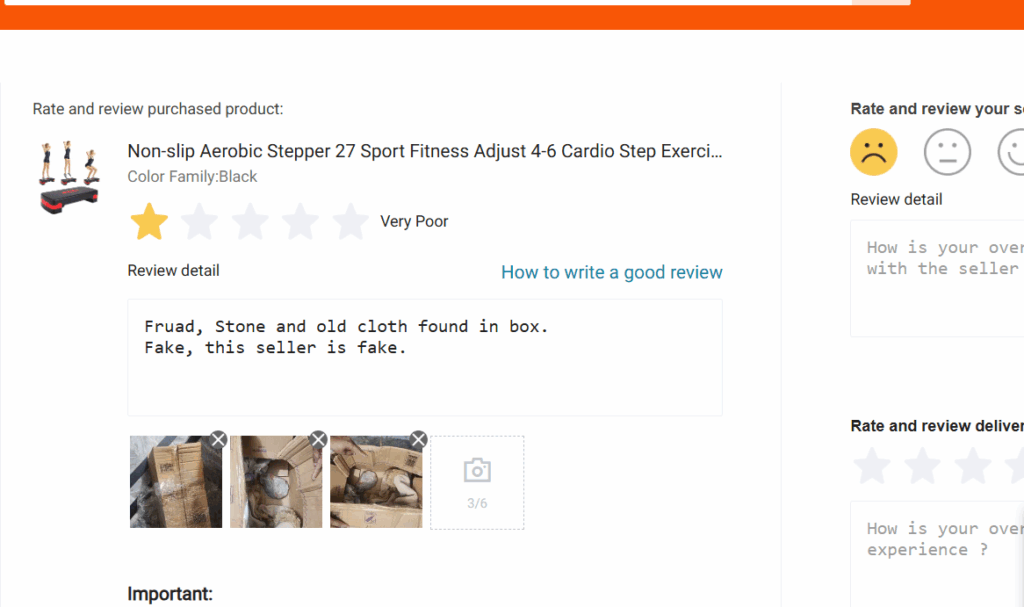
I ordered an acrobatic stepper, planning to start a new workout routine as soon as it arrived. Unfortunately, the delivery got delayed. When I contacted customer support, they blamed the delay on heavy rains. I waited patiently, but when the package finally arrived, it was shocking—it was empty. Inside the box were just broken bricks.

The delivery box had a contact number. I messaged the seller directly and also through the platform’s chat system. The seller replied, claiming it was a mistake and that they had accidentally sent the wrong package. He said, “Keep it—we’re sorting it out and will send the correct item in a few days.”

But this was his personal commitment—outside the online platform. That’s when my trust started to fade.

Now I was stuck in a dilemma: Should I wait for the replacement, or should I raise a complaint through the official website?

I thought about it logically:

  • The order was already late.
  • If the seller had no stock, why didn’t he cancel the order or inform me officially?
  • The platform allows order modifications and communication—why didn’t the seller use them?
  • Most importantly, if he couldn’t fulfill a commitment on the platform, how could I trust his personal promise?

This had never happened to me before.

What surprised me even more was that the seller began requesting I remove my negative review. It felt ironic—he had no problem sending an empty box, but now he was worried about his public reputation?

Why do people have such double standards? When they cheat, it’s “cleverness.” But when someone speaks up, it’s considered “bad behavior.”

Still, I posted an honest review: “I received an empty package with bricks.”

Shortly after, I received a call from the seller, pressuring me again to delete my review. Meanwhile, I had already filed a return request through the platform and sent the package back. I’m now waiting for a refund.

This incident shook my trust in online shopping. I started asking myself:

  • Should I continue trusting online retailers?
  • Should I switch to “Cash on Delivery” instead of paying in advance?
  • Should sellers like this be given a second chance—risking that they might cheat others too?
  • Was leaving an honest review the right thing to do—or was I being too harsh?

In the end, this was the first time something like this happened to me. I’ve decided to give the online platform one more chance—especially since the refund process is underway.

But the seller? No, I don’t trust him. It felt like he was stalling until the return window expired, so I’d lose my right to complain. If I hadn’t acted quickly, even the platform might have doubted me.

Some people say writing a negative review is “aggressive.” But is it? I didn’t exaggerate or lie. I simply shared the truth.

What do you think?


Facing Bitterness and Taking Control of My Attitude

In many parts of life, we put the weight of everything on our own shoulders. We want to do so many things, but the bitterness of life often seeps into us and makes us bitter inside. The same thing happened to me.

There were many things I wanted to achieve, but I saw how some people got ahead using family politics. Sometimes, I even wondered if my parents valued other people more than me. That was my reality. The people who were more politically strong and ambitious defeated me — and people naturally side with those who win. As a result, bitterness grew inside me.

I started feeling like an entitled child — whatever I wished for was granted, but only within a limited, overprotected environment. Because of this, my world was small. Being overprotected, I never learned how to stand on my own, to walk, run, or deal with people and their agendas.

Whenever things didn’t go my way, I started questioning myself. Pain and suffering would grow inside me. My behavior towards those people became bitter, and of course they pointed out that my attitude was the problem. They were right — though I realized it much later — that my attitude was indeed part of the problem. Even now, I still find traces of that bitterness within me.

One thing I’ve learned is this: the pain and bitterness may still be there, but I can overcome it. It’s normal to accept that everyone — even your parents — has their own life, their own priorities, and their own way of thinking. They act according to their own goals and agendas. Accepting this fact was very difficult for me, but it gave me freedom. They are not me.

Another thing that helped me is Stoicism. It taught me to focus only on what is in my control — and my attitude is in my control. In the past, whenever I saw the people who wronged me, I would get angry. Their clever behavior would pump anger through my veins, and I would react badly. Now, I try to focus on the outcome: What will happen if I act this way? Instead of responding with bitterness, I stay silent or ignore them. I shift my focus elsewhere.

True freedom began when I realized that I can control my attitude. I decide where to direct my focus. I also think about what I want as an end result — and whether my actions lead me there.

Even now, the bitterness hasn’t completely disappeared. When I meet those people, sometimes a smile crosses my face — because I see how small they truly are. I know they see me as foolish or naive. They believe they make better decisions and get better results. Maybe they do. Sometimes, I wonder what I lost and what I have become. They defeated me in some ways, but they didn’t destroy me. They think they are the best — but that’s only true in their eyes.

The most important thing I learned is to keep a distance. When a snake bites you, you don’t love the snake just because it’s “yours.” You understand it, you accept what it is — and you stay away.

So the bottom line is this: whatever the situation, you can control your attitude. Maybe you had a bad attitude in the past — but you can change it now. Right now is the moment to start. Face them if you must, deal with them if you must, but be aware. Don’t let the same snake bite you twice. If you can’t control your attitude around them, avoid them. Make new friends. Remember, not everyone is bad — don’t let the bitterness of a few people poison your heart.

Lastly, I realized something important: no one is coming to save you. You are your own cure. You must understand yourself, listen to yourself, and heal yourself. If you don’t, no one will.

Will One Failure Define Me

One failure does not define us.

I once failed as a functional consultant. I failed because I wasn’t a good communicator. I spent most of my life staying on the back foot — always playing it safe, always letting others lead.

Even while holding back, I somehow got the opportunities I wanted. Others protected me. I did the work, quietly, in the background — while others took the credit and the benefits.

This pattern repeated itself again and again. And each time, I failed in the same way — by not communicating, by not stepping forward.

So I started asking myself:
Will one failure define me?
Will one defeat decide my story?
What is my life trying to teach me?

I know now: if I wish to, I can come back. Even if someone tries to crush me, I can rise again. Life’s challenges are calling me to stand up, to start again — this time on the front foot.

So, how do I move from the back foot to the front foot?
First, I need to face the reason I stay hidden. Fear took root in my mind and kept me small.

Now, I choose differently. I will make the best of whatever life hands me. I will build a support system. I will learn how to influence, not just execute.

I will set clear goals — and every morning, I will review them. I’ll ask myself: What must I do today to move closer to these goals?

With steady, daily effort, I will find my way to the top. Step by step — front foot forward.

Learning by Doing Why Action Beats Endless Reading

Why are some people naturally smarter or more successful, even if they’re not avid readers?

You’ll find that many billionaires aren’t bookworms. They didn’t master everything through formal education—they learned by doing. They took action, offered their services, and figured things out along the way.

I still find myself overthinking at times. But here’s what I’ve realized:
If you want to learn a skill, start practicing it.
Want to be a salesperson? Start selling.
Want to be a writer? Start writing.

One powerful habit I’ve adopted is keeping a personal log or journal. After every task or experience, I write down what I did, what worked, and what could’ve been better. Then I apply those lessons the next time. That’s where real growth happens.

Sometimes we get so obsessed with reading books or watching tutorials that we lose touch with the real-world problems we’re meant to solve. Reading is great—it keeps your mind alive and gives you fresh ideas. But life becomes truly meaningful when you pair those ideas with real action—and a good company of friends helps too.

From my own experience, I’ve learned this:
Understand the basics, then just start.
Don’t get stuck in an endless loop of learning without action.
Start doing, and solve problems as they come.

That’s how progress is made.

Email sending form notification.