Saying no is choice

Many times in life, we feel, depress low and disappointed. not because you did not welcome a lot things in life, but not due to saying no what is not important too.

Is it life really all about saying No or yes. Or all about priority Lets discuss this.

If we talk about Stoic Philosophy
Seneca said that
“It is not that we have a short time to live, but that we waste a lot of it.”
It means, we waste a lot of time in task or things, which has no value. If you want to live well, you have to restrict a few things.

“Part of the perfection of one’s Islam is leaving what does not concern him.”

(Hadith – Tirmidhi)

In my life, there was time, when I said everything yes. As result I become some ones else life priorities. The mental stress I face, when I try to make happy those people who think and prove that they are better than me. And I feel very low after that. Its natural. That is not a problem. In some sense they are right. Their sense of superiority lies in suppressing mine.

Later, I realized that life is really about priorities.

But something interesting happens when we set our priorities: we automatically start saying no to many things.
Buddah said that
“You yourself, as much as anybody in the entire universe, deserve your love and affection.”

The truth is that all of us have limited time and limited resources. Because of this, we must learn to organize and use them wisely.

Similarly there is hadith

“Your body has a right over you, your family has a right over you.”

(Hadith – Bukhari)

This hadith also remind us the balance and boundaries.

Sometimes people come to us asking for help. If we have the time, we should help them. But if we don’t, it is perfectly okay to say sorry. We should not sacrifice important tasks that truly matter to us just to avoid saying no.
Buddisim teaching
“Better than a thousand hollow words is one word that brings peace.”
When we say no to something, we are actually saying yes to many things that are more important to us.

The reality of life is simple:

  • We cannot say yes to everything.
  • We cannot accept every opportunity.
  • We cannot do everything.

But there are a few things we can do extremely well if we focus on them.

In the end, saying no is not rejection.
It is simply a way of saying yes to what truly matters.
When life’s reality strikes you

When life’s reality strikes you…
When all hope seems lost…
When every door is closed…
What should you do?

When you’re the best in your field,
Yet still can’t find a way forward,
The only thing left is to hold onto hope.

Sing the song of resilience.
Rewrite your story.
Seek out success stories.
Look around—there’s inspiration everywhere.

Give your all to what you do.
Take a moment to meditate.
Chant with focus.
Believe in a higher power.

Rumi said “If everything around seems dark, look again, you may be the light.”

Is it too risky ?

Yesterday, I was in the company of friends.
One of my friends shared an idea about setting up a food stall at the corner of the local market. We told him it was risky.
Then, another friend mentioned his plan to change careers. He had already found an opportunity, but we told him it was too risky.
Later, another friend shared his weekend plan to visit a hill station. We warned him that it’s risky these days.
Late at night, as I was coming home from work, I thought about visiting the local park for a walk. But my mind reminded me: “It’s midnight—it’s risky.”
The next day, my son told me he wanted to start riding a bike. His mother immediately said, “You’re too young—it’s risky.”
Another friend confided in us about his dream to visit the mountains and climb the highest peak in our country. I told him, “That’s too risky.”
Even one of the young kids I know opened up about his crush, wondering if he should talk to her. He hesitated, thinking, it’s risky.
That evening, I reflected on all these moments.
“What is risky?” I asked myself. Everything seems risky. Our minds often focus on the dangers, the failures, the rejections, or the losses.
But what if we thought differently?

What if we succeeded? What if the food stall became a thriving business? What if a career change brought growth and fulfillment? What if visiting the hill station brought peace and adventure? What if climbing that mountain brought happiness, joy, and a sense of accomplishment?
Of course, there’s always risk.
But isn’t not taking the risk an even bigger one?

I dont know what to do with my life.

“I don’t know what to do with my life.”
I asked myself the same question.
At that time, I had no aims—no goals in life.
If you are facing this question, then this short video is for you.
Consider this another opportunity, not a problem.
The earlier we get an answer to this question, the more successful we become in our lives.
If you still do not answer this question, then consider it.
The first step is to take responsibility. It’s your life. You need to take responsibility for your actions. If you did not take responsibility. Nothing happens. Life remains unchanged, and you will remain unchanged as a consequence.
Second step is to Know yourself. Almost everyone knows something about themself. Pose the question, “Why did you do anything?” Examine your actions and the reasons behind them. What you like and what is reason behind the things you dislike. An amazing dialogue sprang to mind.
Dil me heer liye aur heer khoje veerane me.
This step lets you understand what your values are.

Third step to Set some goals. This step helps you understand what you want and what you can achieve. After setting goals, start working to achieve. Make some plan, what you need to change in your life style. What new habits you need to develop to achieve those goals. If possible break these goals to manageable small step and focus on these steps and start do small and short achievements.

Fourth step to Stop comparing yourself. Everyone has a different journey. Some understand what they want earlier and start their journey much earlier. You never reach their level but you can become better in longer run. If you start today, then with in 5 years you are much in better position.

There is one bouns but optional step. That is about reflection. Start writing journal. And at the end of day. reflect on everything that happen. What you can do little different to achieve different results. Revise it and review it.

Hope you like this video.

Amor Fati

A couple of months ago, while sitting in a gathering, I found myself wondering why certain things happen to me. It’s natural to have these feelings, especially when things don’t go according to our wishes or when we fail despite our best efforts. Many philosophies talk about accepting both good and bad fate. It’s a simple truth that we will fail at times, things won’t always go as planned, people may hurt us, and betrayals can happen. It’s natural to ask, “Why is this happening to me?” Sometimes we even question why we should put in effort if everything is predestined.

In this video, I will share:

  • What is Amor Fati?
  • Why it is important for us.
  • How it makes us strong.
  • What ancient Indian and Stoic philosophies say about it.

“Amor Fati” is a Latin phrase that means “love of fate” or “love of one’s fate.” This philosophical concept emphasizes embracing and accepting everything that happens in life, whether good, bad, or ugly. It’s not about passively accepting whatever life brings but actively loving and finding meaning in all experiences, including the challenging ones.

Marcus Aurelius once said, “Whatever happens to you has been waiting to happen since the beginning of time. The twining strands of fate wove both of them together.” As we grow to love life, we start to see the truth in his words: “The impediment to action advances action. What stands in the way becomes the way.” Obstacles help us build virtue, and virtue is the only sure path to eudaimonic bliss.

Epictetus advised, “Do not seek to have events happen as you want them to, but instead want them to happen as they do happen, and your life will go well.” He also said, “Remember that you are an actor in a play, of such a kind as the author may choose. If short, then in a short one; if long, then in a long one. If it be his pleasure that you should enact a poor man, a cripple, a governor, or a private person, see that you act it well.”

Amor Fati means accepting fate as it comes. We cannot change it, but we can accept it and move on, believing there is something better in it.

What about those things that haven’t happened yet? Often, we hesitate to act because we overthink the results and fear failure. We need to accept whatever the future holds but recognize that it is our duty to work and act.

Chanakya said, “Once you start working on something, don’t be afraid of failure and don’t abandon it. People who work sincerely are the happiest.”

The problem is not the outcome but how wholeheartedly you work on it. Love of fate teaches us to detach from the outcome.

A similar concept is found in ancient India when Krishna spoke to Arjuna: “Therefore, only those who act without being attached to the fruits of their action, but as a matter of performing their duty, can attain the Supreme” (Gita 3.19).

Amor Fati teaches us that what happens to us or is bound to happen is beyond our control. But we should work on our tasks or goals as our duty, staying detached from the outcome. The output is beyond our control. If you give your 100%, you will never regret it.

Implementing Amor Fati in our lives makes us more responsible individuals. We become more aware of what we can and cannot control. It gives us direction in our work. Acceptance of fate helps us overcome pain and suffering, but our feelings, thoughts, and reactions are within our control.

I hope you enjoy this video. Amor Fati helps us understand more about ourselves, what hurts us, and what feelings arise when past events appear in our minds. Instead of focusing on what people think or how they behave towards us, we should focus on our response. There is a common saying that we suffer more in imagination than in reality. Amor Fati teaches us to accept fate and not be afraid to act due to attachment to the end result.

See you in the next video.

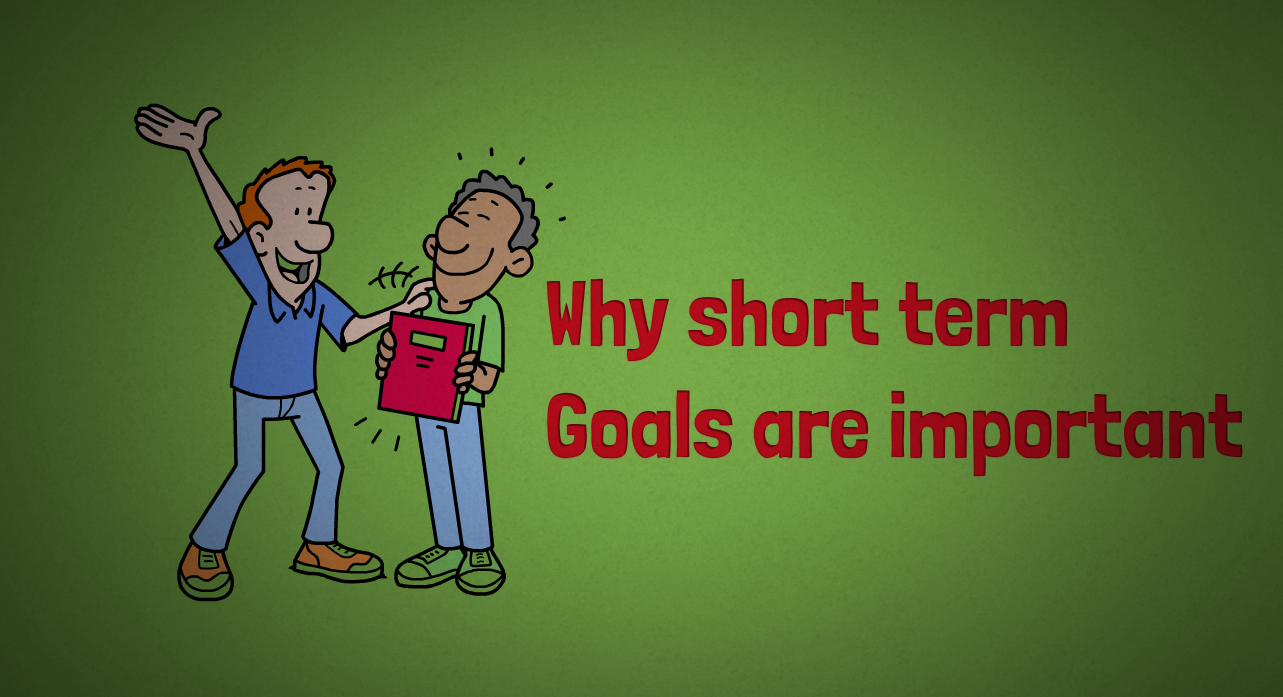
Why short term goals are more important

Goal-setting is essential in life. Those who achieve success in life often have specific goals in mind. Some have written goals; others keep them in mind. The law of attraction, or manifestation, only works when you have goals. The only difference between a wish list and goals is the deadline. Until we begin working towards achieving them, goals remain merely wishlists. 

Why is goal-setting important?

Know what you want and set future goals to be happier and more successful. Goals help us sense where we are going and focus on the objectives we want to achieve. In times of adversity, it gives us motivation and keeps us inspired. Goals are also helpful in assessing our progress. Goals help us become more accountable, and we can improve our accountability in work and professional life. Direction and Focus: We reach some places, but we do not have clear goals. But there are problems. But on the other hand, there are also problems. Sometimes we set unrealistic goals. We spent too much time just thinking and planning. When you start putting in effort and results are not coming, instead of adjusting our sail, we start to be frustrated. My personal experience has shown that our long-term goals often lead to problems. It’s very unclear what the situation will be after 10 to 15 years. The human mind can perceive a situation for a maximum of three months, which allows us to understand our current circumstances from a vantage point. Our vision cannot go beyond 3 months.

Recently, I read a few quotes that all had a similar message. Lord Chesterfield said,

“Take care of your minutes, and the hours will take care of themselves.”

Lord Chesterfield advised focusing on the tasks you need to complete at the moment to reach your goals. Leave the hours to consider how you want to plan out your life.   Then, in the near past, Ramana Maharshi, an Indian guru, had two similar quotes.

The first one is “Engage yourself in the living present. The future will take care of itself.”

“Why should you concern yourself with the future?” You don’t have a comprehensive understanding of the present. Take care of the present; the future will take care of itself. “

These three quotes mentioned only one thing: just focus on the present moment. To focus on the present moment means to concentrate on short-term goals. Why is it important to have short-term goals? The secret to success is to set short-term goals. Short-term goals are visible and easily achievable. And more importantly, you can verify what you achieve.

 In Dale Carnegie’s How to Start Living and Stop Worrying, I read a quote from Thomas Carlyle.

“Our main business is not to see what lies dimly at a distance, but to do what lies clearly ahead.” 

 Long-term goals are just vision. They hide in mist and dust. We cannot see far from now. If you still have long-term goals,. Then just write down these goals. Just set short-term goals. Align these short-term goals with your long-term objectives and concentrate on them. I hope you like this video. If you have goals, then you certainly have a happy life. Your future is bright. If you don’t have goals, drift along. Just start sitting down. Write down what you want and start from where you are. Life will not change until you do not start acting.

Circumstances don’t cause pain

  • A couple of years ago, I thought that what I am now was the result of circumstances.
  • I cannot be changed. I was shaped by my circumstances.
  • These circumstances cause pain and suffering in my life.
  • I was wrong. I was responsible for where I am now.
  • My actions shape my future circumstances.
  • But to some extent, circumstances are responsible for my actions and decisions.
  • The situation in which I made decisions and took actions created additional circumstances.
  • Our circumstances definitely have an impact. But how we react to them. How we take actions.
  • Your present circumstances don’t determine where you can go; they merely determine where you start. Nido Qubein
  • We begin to assume responsibility for our lives on that day. Circumstances have become our starting point.
  • Circumstances create pain; instead of suffering, we move forward.
  • Very interesting quote from Napoleon “Circumstances-what are circumstances? I make circumstances.”

There are three ways to learn anything.

  • I was listening to a podcast where he discussed the concept of learning by doing. I think he is right. One of the most effective methods for learning anything is through hands-on experience. For example, if you want to learn programming or human language, you must practice or do it.
  • The second way is observation. Remember, when you visit a motorbike or car mechanic, young interns are merely observers. They are helpers, but they learn with observation. How are others doing? You observe and then do. Children learn anything from their parents. I continue to learn from my experiences and from the actions of others.
  • Teaching is the third method. If you want to learn any subject, start teaching it. When you are explaining anything to others, our minds think in different ways. Do you remember the rubber duck method? When you are unable to solve your programming problem, use the rubber duck method. Pick a rubber duck and start explaining it to him. Your mind solved the problem.

Why you should love yourself unconditionally?

  • I was thinking what is fundamental thing for healthy self esteem.
  • It is unconditional love for yourself.
  • If we dig deep, unconditional love requires acceptance.
  • Accept yourself.
    • How you look.
    • How much fats you have.
    • a lot of failures.
    • All your weaknesses.
    • All your strength.
    • All your scarifics.
    • And most importantly all successes you have.
  • Some times, truth is ugly. But ugliness also have beauty.
  • Love your ugliness.
  • Love yourself unconditionally.