Have you ever noticed that raw iron has almost no value?
It’s just a lump of metal pulled from the earth.
But when a blacksmith heats it, removes the impurities, shapes it, and forges it into a sword, a tool, or a machine part—its value increases dramatically.
Why?
Because value is created through knowledge, effort, and application.
The same principle applies to wisdom.
Today, we have access to thousands of books, podcasts, videos, and philosophies. But simply knowing something doesn’t change your life.
Knowledge alone has no value. Applied knowledge does.
Taoism teaches us to flow with life instead of constantly fighting reality.
Zen teaches us to be fully present in this moment, not trapped in regrets about the past or anxiety about the future.
Stoicism teaches us to focus on what we can control and let go of what we cannot.
These ideas sound powerful—and they are.
But they remain just words until you practice them.
Reading about patience doesn’t make you patient.
Learning about discipline doesn’t make you disciplined.
Understanding wisdom is not the same as living it.
Just as raw iron becomes valuable through fire and craftsmanship, wisdom becomes valuable only when it is forged into action.
Don’t just collect knowledge. Transform it into behavior. That’s where real value is created.
While sitting alone in my room, I try to bring meditation into my daily life. Life is truly difficult. Challenges keep appearing one after another — my motorcycle engine oil is leaking even after spending money to fix it, the expenses of raising a teenage son, his lack of focus on studies, people ignoring you, and situations that make you feel small and worthless. Yet somehow, I am still surviving.
Financial struggles are another heavy burden. But even then, I keep moving forward. I struggle, focus on what I can control, set goals, and put effort into the next action in front of me. Again and again, I remind myself of Amor Fati and what the Gita teaches: detach yourself from the outcome and focus only on your actions. These ideas help me keep going.
There is a book called The Practicing Mind. It explains that no one can master a musical instrument by practicing only a few times. A musician may repeat the same tune fifty times a day before being able to perform it beautifully on stage. During practice, the mind keeps making noise — telling us to stop, to do something else, to escape discomfort. Many times, we become bored, restless, and frustrated, yet we continue practicing anyway.
Maybe that is the real lesson of life: stay with the present moment, focus on what needs to be done, and keep practicing your path, no matter how noisy the mind becomes.
A couple of years ago, I used to get overwhelmed whenever a difficult situation arose. I would freeze up, not knowing how to respond, and often found myself asking, “Why is this happening to me?” Instead of focusing on finding solutions, I sought validation from others, sharing my problems with them. But most of the time, they weren’t interested in helping—they preferred to laugh at my misery. The more I shared, the more I wallowed in self-pity. It became clear that people enjoyed hearing about my struggles but had no real interest in offering support.
Then, I discovered [[Stoic]] philosophy. I came across Seven exercises that not only helped me handle life’s challenges but also guided me toward inner peace. If you find yourself in a similar situation, this video is for you. I’ll be sharing these seven [[Stoic exercises]], which are designed to not only improve how you approach problems but also help you cultivate inner tranquility.
Each of these principles is rooted in [[stoic]] values like [[self-control]], perspective, and acceptance.
Exercises
1. [[Negative Visualization]]
Start your day by visualizing what could go wrong. Expect nothing from others and consider the worst that could happen. The deal you were banking on might fall through. A trusted friend might break a promise. You might meet people who only care about their own interests. While most of these fears won’t materialize—90% of the time, reality is kinder than we imagine—this exercise prepares you for undesirable outcomes. If nothing bad happens, you’ll be pleasantly surprised, and if something does, you’ll be ready.
2. Self-Control
No matter the situation, we always have a choice in how we respond. That choice is our freedom. Stoicism teaches us to focus on what we can control: our [[thoughts]], [[emotions]], and actions. We can’t control how others treat us, but we can control how we react. This practice of distinguishing between what’s within our control and what’s not is the core of Stoic [[indifference]]. For instance, we can’t control people body-shaming us, but we can work on our health through consistent effort, exercise, and discipline.
3. Resilience: Don’t Give Up
[[Resilience]] is key in Stoicism. When faced with [[adversity]] or failure, it’s our [[perseverance]] that shapes our fate. Achieving any goal requires effort, and the path is often filled with setbacks. The important thing is not to regret trying. Every attempt brings us closer to growth, even if it means embracing discomfort along the way.
4. Journaling
[[Marcus Aurelius]] and [[Seneca]] practiced journaling as a way to reflect on their thoughts and actions. This practice clears mental clutter by allowing us to externalize our thoughts. There are three forms of [[Stoic journaling]] : gratitude journaling, reflection journaling, and planning journaling. Writing down our thoughts helps us prioritize tasks and gain a better understanding of ourselves.
5. Memento Mori
[[Memento Mori]] is the practice of remembering that one day, we will die. This reminder keeps us grounded, no matter how high we rise in our careers or achievements. It encourages us to live virtuously, focusing on wisdom, courage, justice, and temperance. When we realize that life is short, we stop worrying about regrets or future anxieties and begin to truly live in the present.
6. View from Above
Marcus Aurelius once said, “Think of substance in its entirety, of which you have the smallest of shares; and of time in its entirety, of which a brief and momentary span has been assigned to you.” This exercise encourages us to see life from a broader perspective. We often ask, “Why me?” when something goes wrong. But when we view our lives from above, we understand that we are a small part of a much larger whole. This shift in perspective allows us to step out of our narrow view and see the bigger picture.
7. Amor Fati
Amor Fati means “love of fate.” Whatever the outcome—whether good or bad—accept it wholeheartedly. By practicing this principle, we stop obsessing over results and focus on each step of the journey. Fate often refers to the past, something we cannot change. Instead of dwelling on regrets, we must accept our past and live fully in the present.
These exercises help cultivate a mindset of acceptance, resilience, and inner peace. If you’re struggling with life’s challenges, practicing Stoicism may just be the key to transforming how you respond to the world around you.
Yesterday, I experimented. While going to the office, I start looking for a red car. I was searching for a red car, or any vehicle that was painted red. Interestingly, I saw 10 vehicles until I reached the office. Did you experiment with it? Try it.
The fundamental idea is that wherever you direct your attention, it starts to manifest more. There is a quote that says that when you focus, life begins to grow. Where you neglect life, it goes to dry.
Let me explain a little more about the red car theory. If I were to pose one straightforward question to you, When you go outside on a daily basis, how many red cars or vehicles do you see? Did you notice that, most likely, your response would be, “No, not a single one,” or “probably one or two?” However, it’s likely that you failed to notice them because you weren’t focused on them. If I were to offer a reward of $100 to anyone who spots a red vehicle, you would consciously focus on finding 5 to 10 such vehicles. Actual concept opportunities are always present, but once you notice them, they start to appear.
Everything is perception, when our focus changes or we put forth efforts to change our perception about certain things, our environment starts to change.
Experiencing adversity or misfortune often leads to further misfortune, and the opposite is also true when we experience good fortune. More lucky events start to happen. Actually, we were intentionally seeking these.
The question now is, how do we relate this modern Red Car theory to ancient philosophy? They all talk about perception and focus. They all discuss how our mind shapes our reality.
For example, Epictetus said that “We are disturbed not by things, but by the views we take of them.” This quote explains that we have to focus on our perception. While we cannot control events, we can control how we respond to and perceive them. It is our emotional response to these events that determines our experience.
The same way Marcus Aurelius’ said, “The happiness of your life depends upon the quality of your thoughts.” This implies that, regardless of the circumstances, we can maintain our happiness as our minds actively seek it out. our thoughts make of it. If we think more about happiness, more happiness will appear.
Some ancient Indian scripts also talk about a similar concept: “As you think, so you become.”
A similar Buddha said: “We are shaped by our thoughts; we become what we think. When the mind is pure, joy follows like a shadow that never leaves.”
This Buddha quote also talks about the same concept and encapsulates the red car theory. Our thoughts and focus constantly shape our reality. If you concentrate on something, it starts to appear more frequently in your life. If you focus on a red vehicle, you start to see it more often.
I hope you like this video. On closing notes
The Red Car Theory highlights how our focus can shape our reality. By consciously directing our focus, we can alter our thoughts and perceptions of our surroundings. We can notice more things that align with our interests, goals, or emotions.
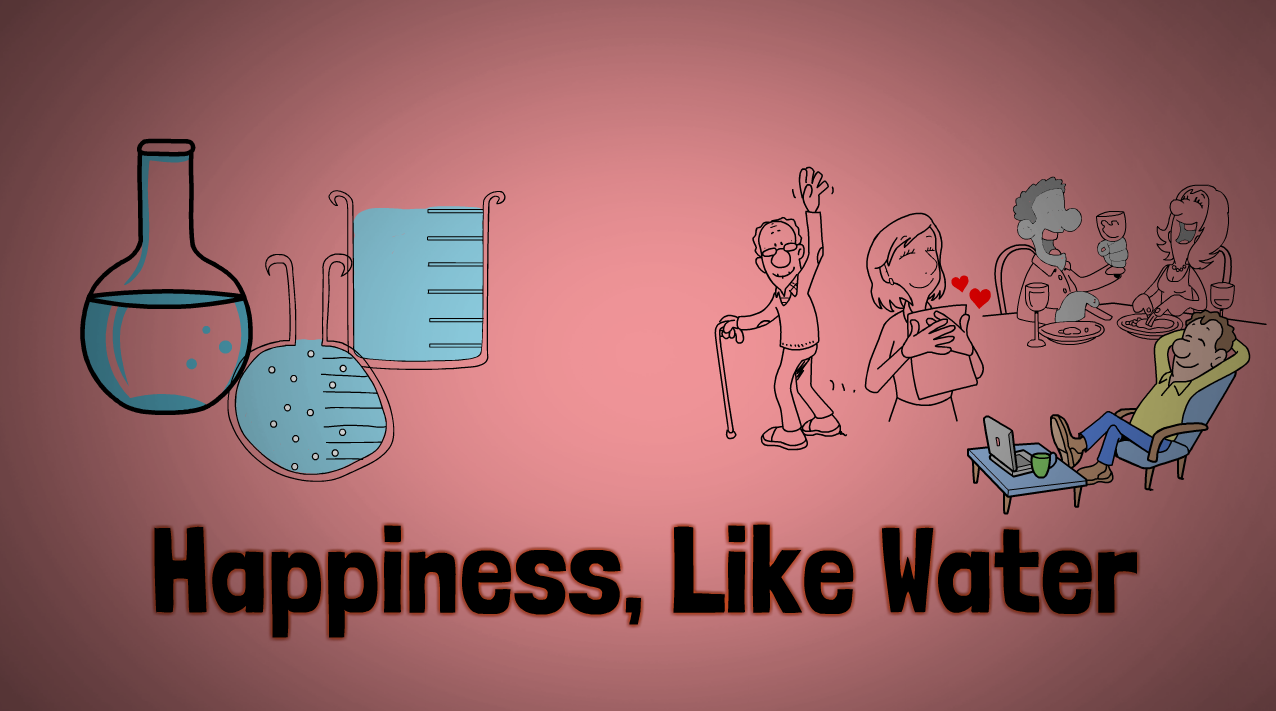
I believe that happiness is a state of mind. When we are happy, certain harmonics release in our minds, leading to a sense of pleasure. and what is meant by “happiness like water.”.
This means that water can fit into any type of pot. Then you can be content and joyful in any situation. Let’s discuss. Once, I was asking myself whether happiness comes from outside our environment, an external factor, or is born inside us. Is it within or beyond our control? Once upon a time, I believed that couples and lovebirds held the key to happiness. However, I discovered that many once-loved and ideal couples do not experience true happiness. I was thinking that achieving something makes you happy. Then I saw a lot of high achievers with successful lives who were unhappy and disappointed. I found that competition makes us happy. When we demonstrate our superiority over others, we feel joy, happiness, and pride. We feel joy and happiness, as well as pride. The other person’s defeat makes us pleased and full of joy. This can also lead to feelings of depression and anxiety. On the other hand, I realized that the person with whom I compete is happier than me because he accepted his life and found meaning in it. Similarly, people who live in large houses, own expensive clothes, and drive expensive cars are not necessarily happy. Conversely, those who are less privileged tend to be happier than their counterparts. Even I saw a homeless person with torn clothes enjoying his life. So what’s wrong with happiness? Achievers, winners, and wealthy people are also unhappy. Even those who have nothing in their lives find happiness and contentment. I began to understand that it was merely a state of consciousness. It is up to us to make life by thinking and acting. Then there is the story of Gautama Buddha: who lived a happy and peaceful life. When he saw misery, death, and old age, he tried to find solutions to world problems. But after deep meditation, he found only one solution. Detachment. Suffering comes from attachment. The way to be happy is through detachment. Make your wishes less. Accept life as it is. Think about what happened. That is for good. Buddha said “There is no path to happiness; happiness is the path. “Happiness comes when your work and words are of benefit to yourself and others.”
https://www.youtube.com/watch?v=GH7cxp8HCvM
“Thousands of candles can be lit from a single candle, and the life of the candle will not be shortened. Happiness never decreases by being shared.” Buddhist ways of achieving happiness are compassion and mindfulness. Midfulness means keeping your mind busy with things and thoughts. Focus on what’s happening in the present moment.Compassion: Keep busy and help others reduce their misery and problems. Let’s explore more about what Stoics said about happiness and how to attain it. Seneca said that “True happiness is to enjoy the present without anxious dependence upon the future.”
Epictetus said that “Happiness and freedom begin with a clear understanding of one principle: Some things are within our control, and some things are not.” Similarly Marcus Aurelius said that “Very little is needed to make a happy life; it is all within yourself, in your way of thinking.” According to Stoic philosophy, happiness comes from only focusing on things that we can control. Let go of things that are beyond our control. Just focus on your actions, thoughts, and reactions. The second method involves dedicating yourself to a high purpose or higher virtue and maintaining a busy schedule to attain it. The third option is to be mindful. Mindfulness means just living in the present moment. Enjoy the present moment. Stoics believe that thinking about the future and past hurts our happiness. What I now understand is that happiness originates within us. Regardless of the situation, it’s up to us to stay happy, depressed, or worried. Accept life as it is. Stay in the present moment by simply making conscious efforts to observe what’s going on and stay busy. In conclusion, happiness is like water. Just as water settles in any pot, so too does happiness. Similar to water, happiness can settle in any situation. It’s up to us how we maintain our happiness.See you in another video.