Red Car theory will it root in Stoicism

Yesterday, I experimented. While going to the office, I start looking for a red car. I was searching for a red car, or any vehicle that was painted red. Interestingly, I saw 10 vehicles until I reached the office. Did you experiment with it? Try it.

The fundamental idea is that wherever you direct your attention, it starts to manifest more. There is a quote that says that when you focus, life begins to grow. Where you neglect life, it goes to dry.

Let me explain a little more about the red car theory.
If I were to pose one straightforward question to you, When you go outside on a daily basis, how many red cars or vehicles do you see? Did you notice that, most likely, your response would be, “No, not a single one,” or “probably one or two?” However, it’s likely that you failed to notice them because you weren’t focused on them.
If I were to offer a reward of $100 to anyone who spots a red vehicle, you would consciously focus on finding 5 to 10 such vehicles.
Actual concept opportunities are always present, but once you notice them, they start to appear.

Everything is perception, when our focus changes or we put forth efforts to change our perception about certain things, our environment starts to change.

Experiencing adversity or misfortune often leads to further misfortune, and the opposite is also true when we experience good fortune. More lucky events start to happen.
Actually, we were intentionally seeking these.

The question now is, how do we relate this modern Red Car theory to ancient philosophy? They all talk about perception and focus. They all discuss how our mind shapes our reality.

For example, Epictetus said that 
“We are disturbed not by things, but by the views we take of them.” 
This quote explains that we have to focus on our perception. While we cannot control events, we can control how we respond to and perceive them. It is our emotional response to these events that determines our experience.

The same way Marcus Aurelius’ said, “The happiness of your life depends upon the quality of your thoughts.” 
This implies that, regardless of the circumstances, we can maintain our happiness as our minds actively seek it out. our thoughts make of it. If we think more about happiness, more happiness will appear.

 
Some ancient Indian scripts also talk about a similar concept: “As you think, so you become.” 

A similar Buddha said: 
“We are shaped by our thoughts; we become what we think. When the mind is pure, joy follows like a shadow that never leaves.”

This Buddha quote also talks about the same concept and encapsulates the red car theory. Our thoughts and focus constantly shape our reality. If you concentrate on something, it starts to appear more frequently in your life. If you focus on a red vehicle, you start to see it more often.

I hope you like this video. On closing notes

The Red Car Theory highlights how our focus can shape our reality. By consciously directing our focus, we can alter our thoughts and perceptions of our surroundings. We can notice more things that align with our interests, goals, or emotions.
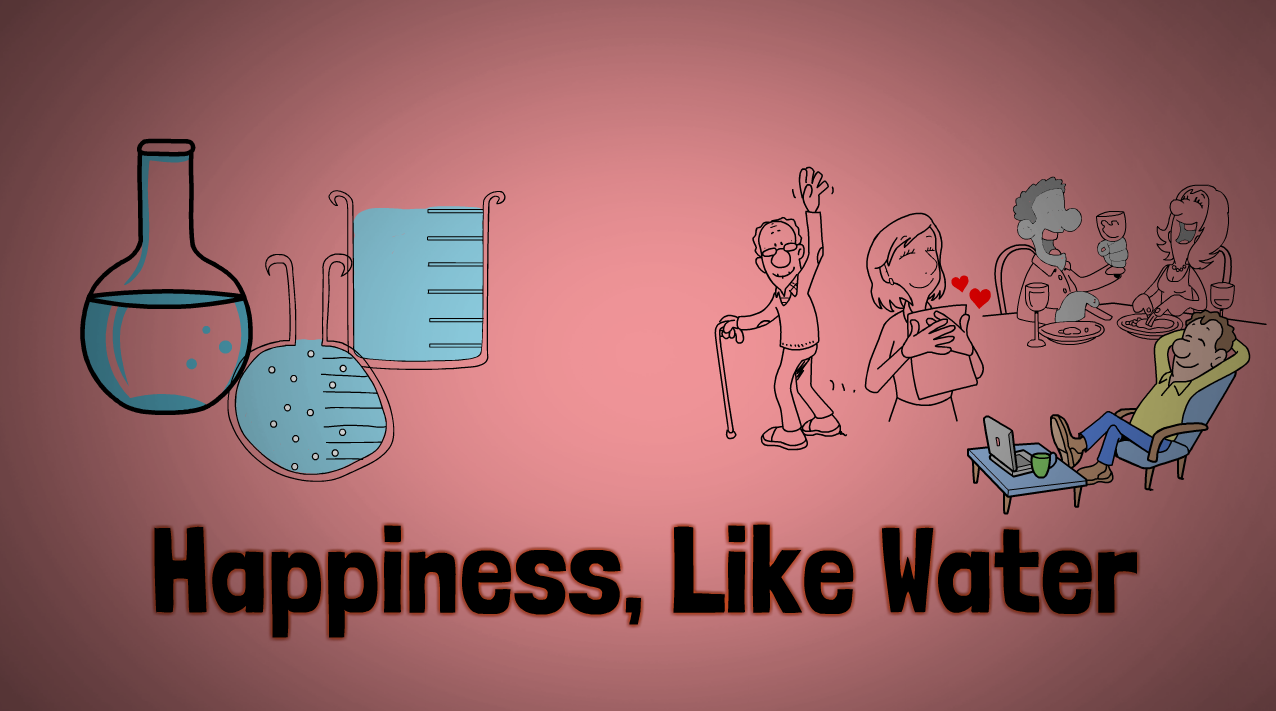
Why Happiness is Like Water

I believe that happiness is a state of mind. When we are happy, certain harmonics release in our minds, leading to a sense of pleasure. and what is meant by “happiness like water.”.

This means that water can fit into any type of pot. Then you can be content and joyful in any situation. Let’s discuss. Once, I was asking myself whether happiness comes from outside our environment, an external factor, or is born inside us. Is it within or beyond our control? Once upon a time, I believed that couples and lovebirds held the key to happiness. However, I discovered that many once-loved and ideal couples do not experience true happiness. I was thinking that achieving something makes you happy. Then I saw a lot of high achievers with successful lives who were unhappy and disappointed. I found that competition makes us happy. When we demonstrate our superiority over others, we feel joy, happiness, and pride. We feel joy and happiness, as well as pride. The other person’s defeat makes us pleased and full of joy. This can also lead to feelings of depression and anxiety. On the other hand, I realized that the person with whom I compete is happier than me because he accepted his life and found meaning in it. Similarly, people who live in large houses, own expensive clothes, and drive expensive cars are not necessarily happy. Conversely, those who are less privileged tend to be happier than their counterparts. Even I saw a homeless person with torn clothes enjoying his life. So what’s wrong with happiness? Achievers, winners, and wealthy people are also unhappy. Even those who have nothing in their lives find happiness and contentment. I began to understand that it was merely a state of consciousness. It is up to us to make life by thinking and acting. Then there is the story of Gautama Buddha: who lived a happy and peaceful life. When he saw misery, death, and old age, he tried to find solutions to world problems. But after deep meditation, he found only one solution. Detachment. Suffering comes from attachment. The way to be happy is through detachment. Make your wishes less. Accept life as it is. Think about what happened. That is for good. Buddha said “There is no path to happiness; happiness is the path. “Happiness comes when your work and words are of benefit to yourself and others.”

https://www.youtube.com/watch?v=GH7cxp8HCvM

“Thousands of candles can be lit from a single candle, and the life of the candle will not be shortened. Happiness never decreases by being shared.” Buddhist ways of achieving happiness are compassion and mindfulness. Midfulness means keeping your mind busy with things and thoughts. Focus on what’s happening in the present moment.Compassion: Keep busy and help others reduce their misery and problems. Let’s explore more about what Stoics said about happiness and how to attain it. Seneca said that “True happiness is to enjoy the present without anxious dependence upon the future.”

Epictetus said that    “Happiness and freedom begin with a clear understanding of one principle: Some things are within our control, and some things are not.” Similarly Marcus Aurelius said that “Very little is needed to make a happy life; it is all within yourself, in your way of thinking.” According to Stoic philosophy, happiness comes from only focusing on things that we can control. Let go of things that are beyond our control. Just focus on your actions, thoughts, and reactions. The second method involves dedicating yourself to a high purpose or higher virtue and maintaining a busy schedule to attain it.  The third option is to be mindful. Mindfulness means just living in the present moment. Enjoy the present moment. Stoics believe that thinking about the future and past hurts our happiness. What I now understand is that happiness originates within us. Regardless of the situation, it’s up to us to stay happy, depressed, or worried. Accept life as it is. Stay in the present moment by simply making conscious efforts to observe what’s going on and stay busy. In conclusion, happiness is like water. Just as water settles in any pot, so too does happiness. Similar to water, happiness can settle in any situation. It’s up to us how we maintain our happiness.See you in another video.

What is Stoicism

Introduction

It was stated that 2000 years ago, there was a king named “Marcus Aurelius.” Despite his immense power, Marcus Aurelius did not behave like other Roman emperors. He left behind his personal dairy. He never intended to publish it, but later in 1558, under the title “Meditation,” it emerged as one of the most fundamental pieces of stoic literature in existence. Medication is a collection of 12 books that chronicle Marcus Aurelius’ perspective on the world and his personal struggles, as detailed in his memoirs.

Indifference

Stoics have perfect indifference. This implies that I am disinterested in things that hold no significance.

The simple meaning of indifference is to not focus on things that are beyond our control. Indifference means to only focus on those things where you can make an impact. Work on it and make a difference.

The Stoics posited that, from a human perspective, there are two types of situations. There are situations over which we have control. Secondly, there are certain aspects of life that we cannot influence.

The second-most important Stoic philosopher, Epictetus, mentioned in his work “Enchiridion” that most things are beyond our control.

Epictectus defines exterior  and interior factors. Exterior factors like friends, colleagues, family members, the economy, and politicians. The way our bodies decay with age is an external thing.

We can influence external factors, but our influence is limited.

According to Epictus, the interior things are our thoughts, our behavior in this situation, our point of view, and our stand against the world around us. Epictus said we should only worry about things in our control.

According to Epictectus, the Clam mind can think and decide rationally, helping us make better choices in our lives.

Basic Values

Stoicism believes in nature. Nature is considered to be whole. Like organized religion, there are no written, hard-and-fast rules.

Stoicism holds that life must be lived in accordance with nature. We have to act to benefit the whole of nature. Not against nature.

Negative Visualization. praemeditatio malorum,

Negative visualization is a useful technique to prepare well and set low expectations. Like Marcus Aurelius, we often have to meet people for various reasons, which can be a challenging experience. By starting the day with a negative visualization, we need to prepare ourselves for these conditions.

We must remind ourselves every morning. Despite all challenges, interference, unacceptable behavior, ill-will, and selfishness, I will achieve my goals.

I will be able to deal with all these negative comments. This will help us to think about the possible challenges we face and how we can achieve the things we want. Consider the worst-case scenarios as a means of preparing yourself for potential challenges.

Memento Mori

A Stoic often reminds himself that life is temporary, known as memento mori (remember that you will die).

So we have to focus on things that are important to us. At the same time, we must remember that everything, including defeat and betrayal, is temporary. Life is temporary, so we did not take things seriously.

The view from above

“The view from above” is another exercise that helps us see ourselves from a cosmic perspective, helping us realize how small and insignificant we are in comparison to the vastness of the universe.

This idea helps us view things from other people’s points of view. Mentally step back and imagine yourself from an outside perspective. This helps us gain a broader view of the situation.

Pause and reflect.

In life, many unexpected events happen, and most of the time, we react to them as they happen. Stoic practice involves taking a moment to pause, reflect, and then respond. This can help you deal with emotional outbursts and respond more thoughtfully.

Hello friends! I hope you like this video. In this video, I share with you the basic idea of stoicism. Indifference is power; life is short; always focus on things that are significant and important. In our current age, stoicism is a valuable instrument that gives us guidance to stay focused and don’t get down in a sea of distraction. Thank you for watching.