- I was listening to a podcast where he discussed the concept of learning by doing. I think he is right. One of the most effective methods for learning anything is through hands-on experience. For example, if you want to learn programming or human language, you must practice or do it.
- The second way is observation. Remember, when you visit a motorbike or car mechanic, young interns are merely observers. They are helpers, but they learn with observation. How are others doing? You observe and then do. Children learn anything from their parents. I continue to learn from my experiences and from the actions of others.
- Teaching is the third method. If you want to learn any subject, start teaching it. When you are explaining anything to others, our minds think in different ways. Do you remember the rubber duck method? When you are unable to solve your programming problem, use the rubber duck method. Pick a rubber duck and start explaining it to him. Your mind solved the problem.
The secret to speaking effectively
- The secret to speaking effectively
- What is secret. there is open secret.
- Before speaking we have clear understanding, at what level of audience you have.
- Before speaking you to think what is message you want to convey. Simply begins with end in mind.
- What is starting point.
- Use story telling style. Human mind understand stories well. If you start,
- Set context. The background.
- Understand, transition points.
- When you switch from one point to another.
- And then practice.
- Some people are born with nature gift of speaking. But as Angela Duckworth said in book Grit “…as much as talent counts, effort counts twice.”
What is Stoicism
Introduction
It was stated that 2000 years ago, there was a king named “Marcus Aurelius.” Despite his immense power, Marcus Aurelius did not behave like other Roman emperors. He left behind his personal dairy. He never intended to publish it, but later in 1558, under the title “Meditation,” it emerged as one of the most fundamental pieces of stoic literature in existence. Medication is a collection of 12 books that chronicle Marcus Aurelius’ perspective on the world and his personal struggles, as detailed in his memoirs.
Indifference
Stoics have perfect indifference. This implies that I am disinterested in things that hold no significance.
The simple meaning of indifference is to not focus on things that are beyond our control. Indifference means to only focus on those things where you can make an impact. Work on it and make a difference.
The Stoics posited that, from a human perspective, there are two types of situations. There are situations over which we have control. Secondly, there are certain aspects of life that we cannot influence.
The second-most important Stoic philosopher, Epictetus, mentioned in his work “Enchiridion” that most things are beyond our control.
Epictectus defines exterior and interior factors. Exterior factors like friends, colleagues, family members, the economy, and politicians. The way our bodies decay with age is an external thing.
We can influence external factors, but our influence is limited.
According to Epictus, the interior things are our thoughts, our behavior in this situation, our point of view, and our stand against the world around us. Epictus said we should only worry about things in our control.
According to Epictectus, the Clam mind can think and decide rationally, helping us make better choices in our lives.
Basic Values
Stoicism believes in nature. Nature is considered to be whole. Like organized religion, there are no written, hard-and-fast rules.
Stoicism holds that life must be lived in accordance with nature. We have to act to benefit the whole of nature. Not against nature.
Negative Visualization. praemeditatio malorum,
Negative visualization is a useful technique to prepare well and set low expectations. Like Marcus Aurelius, we often have to meet people for various reasons, which can be a challenging experience. By starting the day with a negative visualization, we need to prepare ourselves for these conditions.
We must remind ourselves every morning. Despite all challenges, interference, unacceptable behavior, ill-will, and selfishness, I will achieve my goals.
I will be able to deal with all these negative comments. This will help us to think about the possible challenges we face and how we can achieve the things we want. Consider the worst-case scenarios as a means of preparing yourself for potential challenges.
Memento Mori
A Stoic often reminds himself that life is temporary, known as memento mori (remember that you will die).
So we have to focus on things that are important to us. At the same time, we must remember that everything, including defeat and betrayal, is temporary. Life is temporary, so we did not take things seriously.
The view from above
“The view from above” is another exercise that helps us see ourselves from a cosmic perspective, helping us realize how small and insignificant we are in comparison to the vastness of the universe.
This idea helps us view things from other people’s points of view. Mentally step back and imagine yourself from an outside perspective. This helps us gain a broader view of the situation.
Pause and reflect.
In life, many unexpected events happen, and most of the time, we react to them as they happen. Stoic practice involves taking a moment to pause, reflect, and then respond. This can help you deal with emotional outbursts and respond more thoughtfully.
Hello friends! I hope you like this video. In this video, I share with you the basic idea of stoicism. Indifference is power; life is short; always focus on things that are significant and important. In our current age, stoicism is a valuable instrument that gives us guidance to stay focused and don’t get down in a sea of distraction. Thank you for watching.
Why you should love yourself unconditionally?
- I was thinking what is fundamental thing for healthy self esteem.
- It is unconditional love for yourself.
- If we dig deep, unconditional love requires acceptance.
- Accept yourself.
- How you look.
- How much fats you have.
- a lot of failures.
- All your weaknesses.
- All your strength.
- All your scarifics.
- And most importantly all successes you have.
- Some times, truth is ugly. But ugliness also have beauty.
- Love your ugliness.
- Love yourself unconditionally.
There is no one like you
Some of us compare. Or be compared.
Most of the time, comparisons serve to enhance our performance. Sometimes it happens to crush us.
But actually, the only real comparison happens when we compare ourselves to others.
We are our biggest competitor. If we had performed better today compared to a year or months ago, we would have emerged victorious.
If not, then we are losers.
Why do we compare ourselves with others?
Every person has unique qualities. Find out for yourself. If you are not proficient at speaking, then certainly you are proficient at writing.
Focus on your gifts. find it.
The way get to know yourself is by finding feedback. Or observation.
There is a highly recommended book on this topic.
managing oneself. by Peter Docker.
There are two intriguing quotes in Punjabi.
“man tooN jot saroop hai aapnaa mool pachhaan.”
Means perfect in every means (like divine). Find your true worth.
“””JO BRAHMANDE SOI PINDE JO KHOJE SO PAYE “”
Means, you are complete universe with in, everything in self. Now find it in yourself.
Why assertive communication is important
Suppose you are working on assigned tasks. Your tasks are not completed. Your boss has arrived and is assigning you additional tasks. And ask to complete those tasks. He set unrealistic deadlines. To meet these unrealistic deadlines, you spent extra hours overworking. The result is buggy. You are not producing outstanding results.
Because you avoid conflict, you have to accept more and more work. And as a result, you were unable to meet the expectations. And became a B-grade employee. Despite the efforts, implementations of ideas, and suggestions, nothing changes, and the situation becomes worse day by day.
The management frequently complains about your work. Your performance is declining daily.
Is there a lack of communication here? No, you’re speaking with your manager. But your communication style needs to change. You definitely work on a few things to make an impact. Let’s discuss three communication styles and how you need to change for better communication if you want different results.
Passive communication.
Passive communication’s primary goal is to avoid conflict. To achieve this, you strive to conceal your emotions and thoughts about your task. You must suppress your emotions and thoughts, allowing others to make decisions on your behalf. It results in frustration and dissatisfaction at work.
This situation usually leads to a lose-win situation.
Aggressive communication.
The main theme of aggressive communication is to focus solely on your own needs and feelings. Aggressive communication often suppresses the feelings and thoughts of co-workers. When confronting others, it is always defensive and aggressive.
Aggressive communicators invade other people’s personal spaces. Or, never let another person speak.
Assertive communication.
The main theme is honest communication about your thoughts and feelings. The theme is to share what is actually happening. Instead of suppressing other people’s needs and wants, we need to communicate in such a way that others will feel respect for their ideas and feelings. In assertive communication, the communicator needs to communicate challenges and hurdles to their task.
Assertive communication is a win-win situation. It implies that while respecting others needs and wants, the communicator also asserts his own.
Why does it matter?
Why assert that communication matters? It matters because passive people are generally frustrated, unhappy, and dissatisfied with other people’s needs. Passive people cannot comfortably share their opinions or needs. They constantly worry about the other person’s happiness. They strive to cater to the needs of others.
But assertive people are more balanced in their ability to put themselves first and consider others. While assertive people are happy, they balance their needs with those of others.
Now let’s come back to the example mentioned at the start of the video.
When the manager assigns you a new task, you have to describe your current situation. If the manager assigns you a task with an unrealistic deadline, you must explain why. You must explain to him how much time it takes to complete the task.
In closing notes, Assertive communication is necessary for career growth. People love assertive people who listen and care about others while considering their own understanding of matters and providing the solution to the problem at hand.
I hope you like this video. Please subscribe to our channel.

How to be overcome the future anxiety
Lao Tzu said that
“If you are depressed, you are living in the past. If you are anxious, you are living in the future. If you are at peace, you are living in the present.”
It’s human nature that we either think too much about the future or think about what happened to us in the past.
Neither we have to live in the future nor we have to live in the past. Thoughts can not be controlled. When we resist a thought, it gains more power. Whatever you resist, persist.
In this video, we discuss anxiety about the future. And how to deal with it.
In my deep analysis, I discovered that two types of fear appear in our minds when we are anxious about the future.
Fears about relationships and careers.
If you are a father, then usually parently related problems start to appear in our minds.
What is the future of my son, my daughter, or both?
Will they become successful in their lives? I feel they are not responsible yet.
If you are a teenager, then anxiety about relationships with your partner or loved ones will come to mind.
Teenagers will also experience exam-related fears. What is my future? Will I pass the exam, Will I get admission to the Big University?
If you’re a professional, most of the time you’re anxious about your professional challenges.
Will my job continue?
Will I get my next promotion?
Then, as time passes, the fear of aging and experience becomes increasingly irrational.
Sometimes, we are worried about certain situations and what people will say about them.
The solution is a three-step process. If you follow this, then you will definitely overcome your future anxiety.
Step number 1: Write down your worries.
Calm down, everyone has this anxiety problem. Thoughts come into everyone’s mind. Some people manage to overcome these thoughts, but those who are unable to do so often fall into depression.
Pick a copy pencil or digital note-taking app and write down what comes to mind.
Step number 2: Write down possible scenarios.
When you write down all your worries, express them more clearly. Write down three scenarios for each worry or fear.
What is the worse case, scenario?
What is happy scenario? What if things go according to our wishes?
What will be normal scenario, i.e., life will remain the same with neither improvement nor bad.
Step number 3. Ask questions about the solution.
It is said that
“The quality of your life is determined by the quality of the questions you ask yourself”
Write down the following question for each worst-case scenario:.
Is it worth my attention?
What can I do differently to ensure that this situation never occurs?
What skills do I need to learn to stay relevant in any situation.
What should I do if that situation happens.
What small step do I need to take today to ensure that this situation never happens?
What you need to do is slightly different from today, and the outcome will be different.
What new skills and behaviors do I need to learn to achieve different results?
Step number 4: Take action.
Most of the time, we are worried about things that never happen.
Remember, my friends, nothing happens until we take action. Start working on what you decided in step number 3.
If we are still worried and thinking about things that may happen, life never changes. Life will change only when we take action. Start focusing on those things that help to prevent that bad-case scenario from happening.
Avoid worrying about things that are beyond our control.
Things that are irrelevant and out of our control require no action. The only thing we can do is let them come and go. When these worries come into your mind, just remind yourself that these things are beyond my control. I cannot do anything about this.
But those worries, for which you can do anything, just focus, remind yourself that you are already working on, and take small steps so that situation happens, You will be well prepared and handle the situation.
In conclusion, we often worry about events that are either unavoidable or beyond our control. We can only make changes when circumstances are within our control. We must decide what we can do for those things and begin working pro-actively to achieve them.
I hope you like this video. Please like and subscribe to our channel.
Keep this in your mind when your son become teenage.
- “Your worst enemy cannot harm you as much as your own unguarded thoughts.” -Gautam Buddha
- The same is true when we see our own child failing to follow the right path and following his own will.
- We have to guard our thoughts about what we want. Once I organized my thoughts and realized this,
- My son is like my younger self.
- And I want to tell myself what mistakes I made. What should I do if I get a chance to go back to my teens?
- But the issues are the same. My son is not me. He did not listen 100 percent. Some times he follows my instructions, but other times he follows his own will.
- He thinks of life as it is. But it will not be the same. Time will change. And he have to take his responsiblity of life.
- When I was a student in school, I often asked myself, “Why do I need to come first in my class?” When I just passed the exam.
- But now I realize that I performed better when I was a child. Now I am performing excellently.
- I never understood how laborious my father was. How long did he work hard in the office to bring his salary home?
- He did not understand it in the same way as I was once doing.
- So I decided to let him live his life. He is different from me. He has different skill sets. His interests are different.
- Many times, we overprotect our children.
- This overprotaction did not let them grow.
- There is a saying that when your son’s height equals yours, make him your friend.
- We have to let them make their own decisions.
- In the 21st century, we can only influence our children; we cannot instruct them.
- We have to accept this fact. We are responsible for ourselves. Not for them.
- Just influence and guide them; do not expect too much from them.
- Now they are open to understanding what is right and what is wrong.
- Be hopeful, but do not expect too much.
- Let’s be hopeful. He will be a good person. He will excel in his career. He will take responsibility for his life soon.
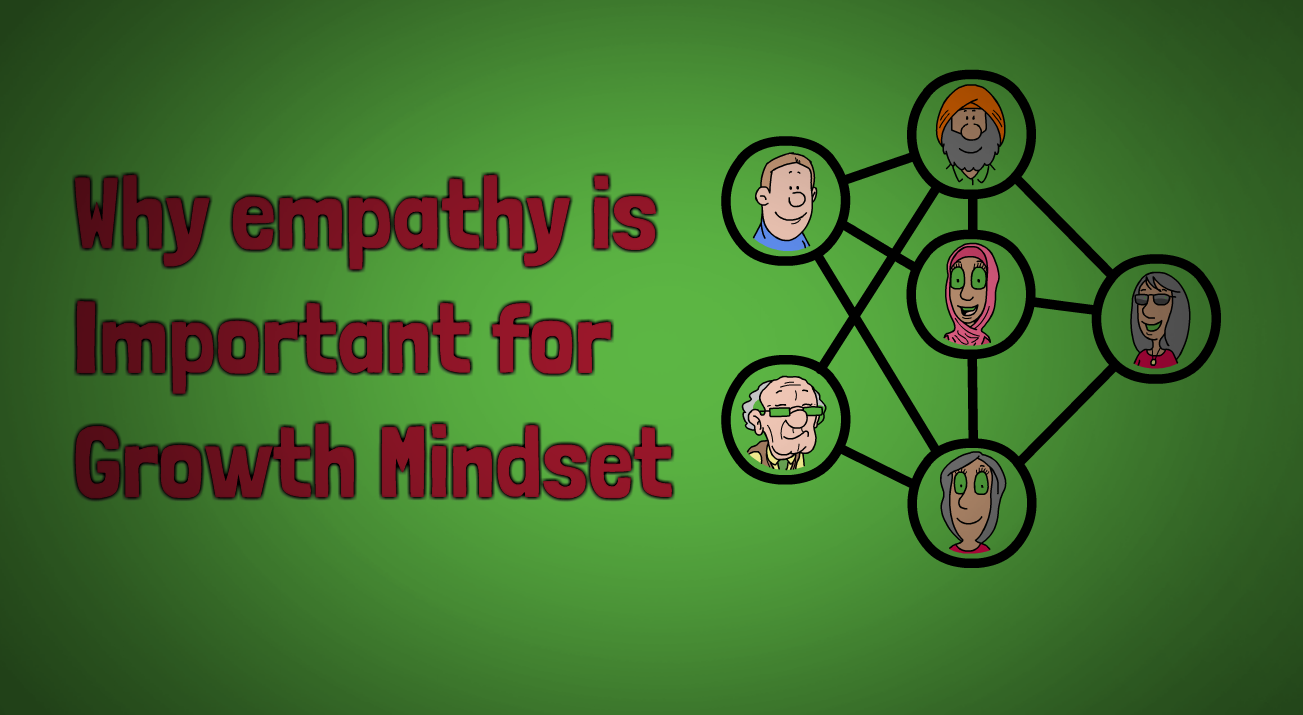
Empathy for growth mindset
Hello and welcome to our channel. Today we are going to discuss empathy. what empathy is, why it is important for a growth mindset. How can we cultivate a mindset of empathy? If you want to know all this watch this video till the end.
Lets discus what empathy is:
Empathy is the ability to understand what another person wants and thinks about the situation. It involves putting yourself in another person’s shoes. I Every person has their own feelings, thoughts, and beliefs. Their circumstances shape these beliefs and thoughts. Empathy is the ability to understand another person’s nature and point of view in order to act, behave, and deal with them. As individuals with growth mindsets, we must comprehend this and act accordingly. If you are a leader, either leading a family or team in the office, you must understand others. Empathy is crucial for building relationships with others. Lets discuss why it is import:
The most important part of having a growth mindset is the ability to work with others. Without empathy, we cannot lead others or coordinate with others.
Number one Learning from others:
Every person has something good inside. Every person has unique experiences. We can only learn from them if we have a good relationship with them. We understand them. Only then will we be able to coordinate with them.
Number two Resilience:
Resilience is the ability to bounce back from failure or adversity. Every person has their own challenges in life. We don’t know what others are facing. It is empathy that enables us to understand that others are also facing challenges. Empathy helps us to become resilient; during our tough times, we can observe how others are resisting their failures and adversities. They never give up; why are we giving up?
Number three Collaboration:
Collaboration means working together to achieve a common goal. Until we practice empathy, we do not collaborate with others. Collaboration means we share knowledge, ideas, resources, and responsibilities. The most important thing in a collaboration is communication. We cannot communicate effectively until we are able to see another person’s point of view. Number Four Adaptability:
Empathy helps us build the ability to adopt. Depending on the situation, we understand others and adapt to change. Adaptability is a give-and-take. What does another person want? How much space can we give him to achieve a common goal? Until we adopt, we cannot succeed.
Lets discuss how we can built empathy mindset:
Empathy, for a growth mindset, is a foundational trait. Until we are able to understand others’ needs, wants, and feelings, we cannot grow. We didn’t collaborate with them. We can move forward until we have common goals. We cannot adapt according to the situation. Now the question is how to develop an empathy mindset. Here are a few important tips:
Tip number one Listen actively:.
When we speak, we only share what we know. But when we listen, it increases our knowledge and experience. Listening is only one way to understand what others think. It helps us understand what other people have to say, as well as what they like or dislike.
Tip number two put yourself in another person’s shoes.
Before speaking to another person, put yourself in their shoes. Imagine his response, his thought process, and the type of question he might ask. What are the possible benefits and disadvantages of the point you are going to convey . The ability to think while standing in another person shoes helps us to built empathy and lead others That requires practice, not precise action. But as time passes, you become an expert in this domain.
Tip number three Ask Questions:
There are closed-ended and open-ended questions. A closed-ended question means they have only two answers. Yes or no. And open-ended questions have long answers. Detailed and sometimes long answers. When interacting with anyone, ask open-ended questions. That helps you understand others.
Tip number three Be Curious:
Curiosity is the one thing that helps you get to know others. Be curious about others. What movies do they watch? What dresses do they like? What types of activities are they interested in? What type of experience do others have? If you want to meet others and have relationships with them, you must be curious about them.
Tip number four Reflect on your interactions:
One of the best ways to improve yourself is through reflection. So start reflecting on every Tip on interaction with others. In the evening, sit down and write down all interactions with others. Note down what others speak about. What other people are concerned about. That reflection helps you understand others. Later, you will be able to see things from other people’s points of view.
Tip number five Seek Diversity.
Many times, when we interact with others, we find that they are different from us. It’s human nature that we like those people who have similar interests and points of view. But life is full of diversity . We have to accept others; we accept their point of view. We accept that they think and act differently. We can only influence others when we accept them. Hope friends. You like this video. In closing notes, empathy is a critical skill for a growth-minded person.
Until we are able to see things from another person’s point of view, we cannot influence them to act and work with us toward a common goal. Empathy is a mindset, and that can be learned with simple steps. Try to listen to others; be curious about them. Listen to them. understand them. Later, you’ll be able to influence them.
The only communication tip ever required.
Many times in life, when we have fewer friends, we tend to speak to everyone who comes to meet us or interact with us. We start to speak on any topic we want to share, and as a result, our impression of important people is not good. If we do not communicate effectively, they consider us to not be people. I have done this many times. This continued until I understood the significance of intention. I first listened to this topic in the Opera Winfield video. According to her, intention is a cause that creates an effect. We cannot avoid the effects until we focus on the causes. And intention is the cause. If we understand this point and act accordingly, we can create a positive impact on others.
Now come back to the topic of communication. We communicate every time, even in those moments when we are busy at work. Or sitting silently. Only speak with intention. Otherwise, just listen. Speak with intention, which means understanding what you say will have an impact on your listener. another person. In the working environment, your boss or colleague understands that you are You can identify yourself as a domain expert, subject matter expert, or generalist. Or after listening to your Or you are creating an impact by sharing the stories of being a nice and happy person. Here are some tips for speaking with intention: Tip No. 1: Define what type of impact you want to convey. For example, in the office, you want to create the impression that you are a subject matter expert. You did not want the impression that you were good communicators. Or you are an expert in certain religious points of view. When you are sitting with friends, then again, you have to speak with intention. Either way, you are helping others solve their personal problems. Or you give another guy a listen-eye. Tip 2. What message do you want to convey? Define the message clearly. As per your experience, what is a decision already talked about, and what will be its impact? For example, the assigned task is complete, and you want to share this message with your boss to show him how much effort you put into completing it. Define your message clearly. For example What is the solution to the problem that your boss or colleague is searching for? What types of challenges arise if we implement certain solutions? Define the message clearly. As per your experience, what is a decision already talked about, and what will be its impact? Always begin with the end in mind. Tip 3: Define the context. People did not understand your point or message. Until they have a clear context, people are busy; they are not present mentally. They have to complete their own tasks. They did not understand your complete message until you provided context. Tip 4: Define the transition points. When discussing multiple points, you focus on the transition points. This allows you to effortlessly transition from one point to the next. You have to consider these points before going to meet your boss or friend. It seems that these points are lengthy and complex, but with practice, you can perform them in a few minutes or in a few seconds. Hi friends, I hope you like this video. On closing notes, there are two points: speak only when it is required. And speak with intention. Intention means What type of impact do you want to create on others? Please subscribe to my YouTube channel. See you in another video.